Posts

Herons and egrets in Extremadura
Image
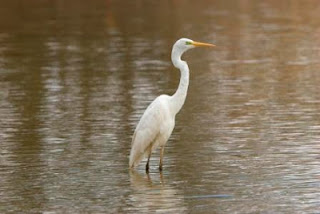
This is shaping up to be a good autumn as far as the weather is concerned here in Extremadura, with plenty of rain so far this month. The landscape is looking magnificently green. The gorgeous little bulb, Narcissus serotinus is in flower on the plains, putting forward a wonderful, if ephemeral, show. At last the Common Cranes are arriving too, rather later than usual this year. Four days ago I visit the crane reserve at Moheda Alta, where there were 77 (yes, I counted them all) Common Cranes feeding on the rice stubble fields, and just a few hours later that number had increased to over 300 as parties arrived through the morning. During the week I picked up my copy of the study published by the Spanish Ornithological Society  (Garrido, J. R., Molina, B. & Del Morel, J. C. (Eds) 2012. Las garzas en España, población reproductora e invernante en 2010-2011 y método de censo. SEO/BirdLife. Madrid) on the census of breeding and wintering herons and egrets that took place in...
All change for autumn

Image
I had been away for over six weeks, indeed the longest absence from my beloved Extremadura for eight years. When I left summer was still upon us, with the landscape looking tired, dry and withered. The Red-rumped Swallows nesting by the kitchen door had their second brood of chicks noisily chattering away within their beautifully built nest. Coming back earlier this week, the first thing that struck me was how the landscape had become an emerald green. This is how we always hope it should look like by mid-October and is testimony to the autumn rains. For us, in many ways, autumn feels like a second spring, a changing of the guard as far as the birds are concerned, but also a transformation of the colour of the fields and plains. The Red-rumped Swallows had left just a few days before I returned, but as soon as I arrived home, I heard Robins calling. They are winter visitors to our garden and their ticking notes and winter song will be with us now right through to spring. I headed ...

So flows the river

Image
I suppose my fascination with rivers started as a small boy, thanks to the proximity to home of a small tributary of the Thames, the River Roding. So close infact, that by scrambling through a hole that I had made in the hedge at the bottom of the garden, I could emerge beside a muddy bank and onto a little path that followed the meandering river upstream. We lived in the small village of Abridge in Essex, just 20 kilometres from Hyde Park in London, on two London Transport bus routes and close to the Central Line of the Underground, but still the village felt part of rural Essex. The very name Abridge, drew attention to its relationship, our relationship, to the river. From the house we could look over water meadows which once or twice in the winter would flood. Waking up we would look across a vast shallow lake, with dozens of Black-headed Gulls apparently aimlessly drifting about as they swam on the surface. But it was the river which was the magnet for me. A place...

As summer ends

Image
As August ends we always have the sensation of a turning point. We have just returned from our annual visit to Britain, taking part in the magnificent British Birdfair and staying on for a few days with my parents in North Norfolk. The British Birdfair is not just easily the best place to catch up with my old friends and colleagues, spanning dare I say well over thirty years, but also a shop window for Extremadura. Over the three days of the fair, we speak to hundreds of people and almost immediately emails start coming in as people start to take in what they have heard and start planning their next holiday. Our booking schedules start getting filled as we impart advice on the best time to come to meet the expectations and dreams of those who we hope will soak in the pleasure of birding in Extremadura as many have done before them. A few days then to relax on the Norfolk coast, meeting old birding friends again, this time in the field itself and renewing aquaintance with species tha...

Bands of Bee-eaters

Image
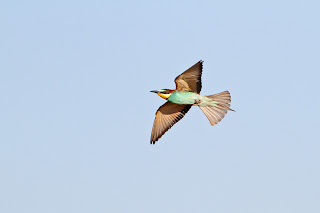
Another heatwave, fiercer than before with temperatures now over 40 degrees in the shade by our kitchen door for most of the afternoon and evening. There is a seemingly still mood everywhere. People are indoors for most of the day, getting work done outside first thing in the morning and taking the evening walk ( el paseo ) with neighbours. I have completed another annual tasks, always in my August to-do list, chopping off the shoots from the bases of the olive tree trunks. Over the late spring these have sprouted to form first a stubble and then by August a dense mass of vertical shoots. Over the last couple of mornings, using a small hatchet, I've cleaned the bases of the trees and there are now sheep in the paddock to nibble off the little shoots. It is a satisfying, pleasing task, leaving the broad bases of the trees clean, their wonderfully gnarled outline now defined and precise. What wonderful old specimens they are, with numerous holes and niches, one having provided a ...

Pratincole gatherings

Image
Late July and dawn down on the rice fields. The crop is standing deep and green, covering practically all the fields around me. Already there are teams of people working in the fields, pulling out weeds and a couple of tractors are out there as well. At first glance the area seems almost birdless, apart from a few White Stork standing on the banks separating the fields. A distant Marsh Harrier is quartering the ditches. There are parties of the tiny finches, the Red Avadavats, with the males now in full breeding plumage: bright red with white spots, hence their delightful Danish name: the Strawberry Finch. Originally from India, they are quite at home in the ditches beside the paddies and have their breeding season in the autumn. I turn up a little track and there, resting in front of me, is the biggest flock of Collared Pratincoles I have ever seen here. I quickly estimate 250 birds and when I later go through the photo (below) I count 262...not bad! The group was a mix of a...

Watching the Iberian Lynx

Image
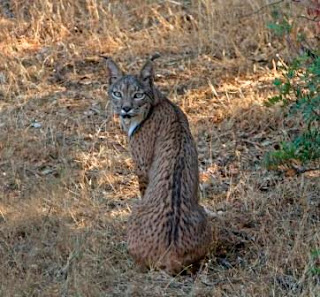
What struck me almost immediately was the number of rabbits. We do not see many in Extremadura, but here I was seeing more rabbits in one morning than I would in more than a whole month at home. This was a good sign, because our quest on this mid-July expedition was a rabbit-specialist, the Iberian Lynx. Claudia, Patrick and I, along with our friends Anthea and John Hawkins (who took the attached photos of Lynx here) and David Hosking, had ventured outside Extremadura to spend four days in the Sierra Morena, near the Andalucian town of Andújar. The hilly terrain was covered by holm oak dominated dehesa , open woodland providing grazing. There were stone pines dotted around and exposed, weathered granite boulders, reminding me of the berrocal habitat around our home town of Trujillo. The Jándula river ran through the landscape, with two dams creating narrow, steep-sided reservoirs. Most of the landscape in view was either Natural Park or large hunting estates. This refu...